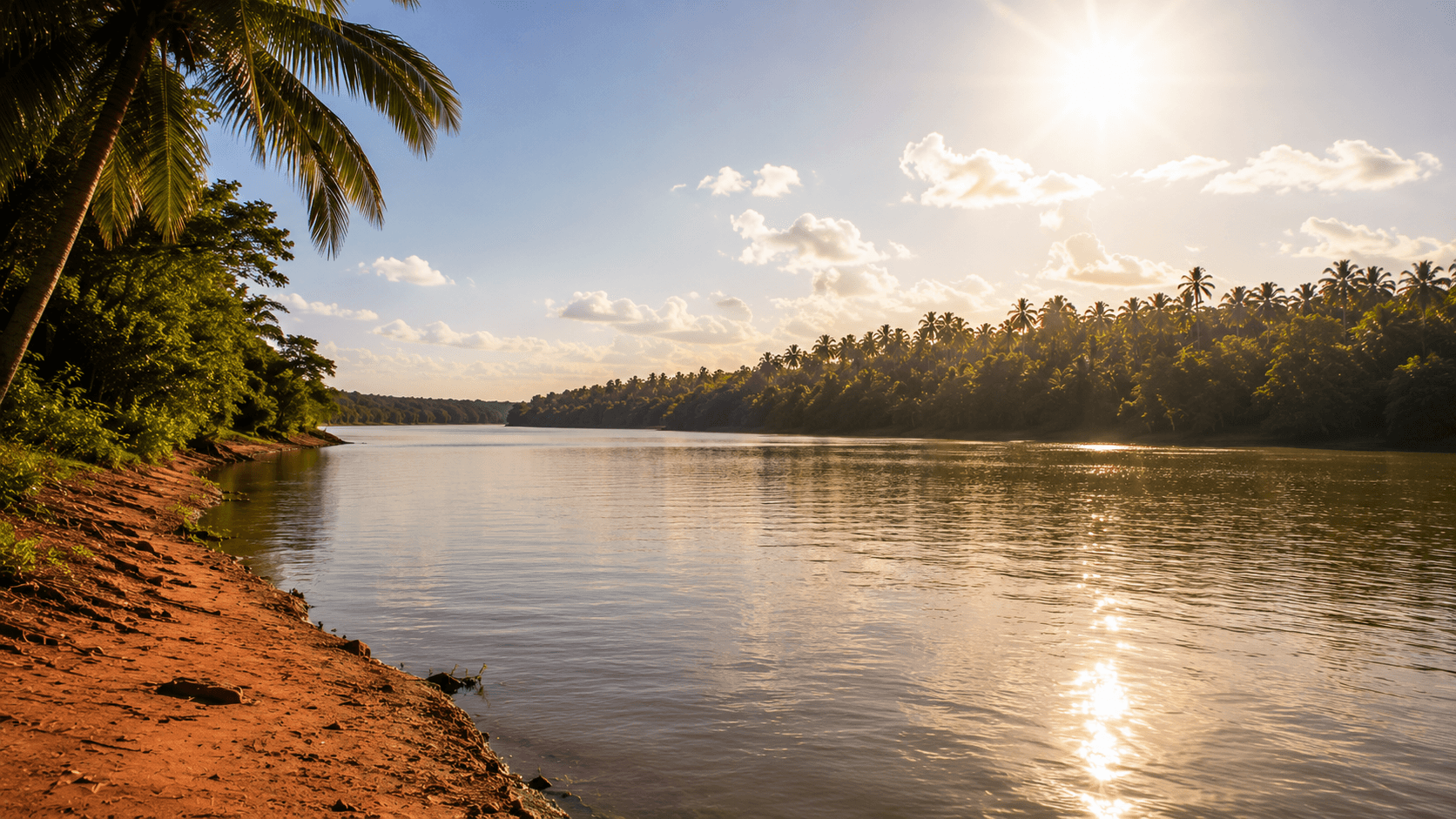
 Photograph — Casamance river, Bambali
This land bears the name of a king. It has always given an exceptional mango — and, every year, watched it go to waste.
Casamance takes its name from Kasa Mansa, the king of Kasa. A region apart in Senegal: greener, more humid, crossed by a river that gave it its name, edged with protected forests. The soils are rich, the climate mild — and the mango tree has grown here so long that it belongs to the landscape as much as to daily life.
Here, the mango is not an imported crop. It's in the yards, in the villages, along the laterite tracks. Old homestead orchards stand beside top-grafted ones; the local varieties bear names found nowhere else.
A royal land, an exceptional mango — and a value that was leaving elsewhere.
For that is the paradox. Southern Senegal produces the country's finest mango, and every year thousands of tonnes are lost there: for lack of being sorted in time, for lack of cold, for lack of a facility able to transform them on site. The fruit falls, ripens too fast, and what should become value becomes loss.
Bambali, on the river's banks, sits at the heart of this paradox. That is where we planted our orchards. Not to draw a raw material and ship it elsewhere, but to build, on this land, the facility it had been waiting for.
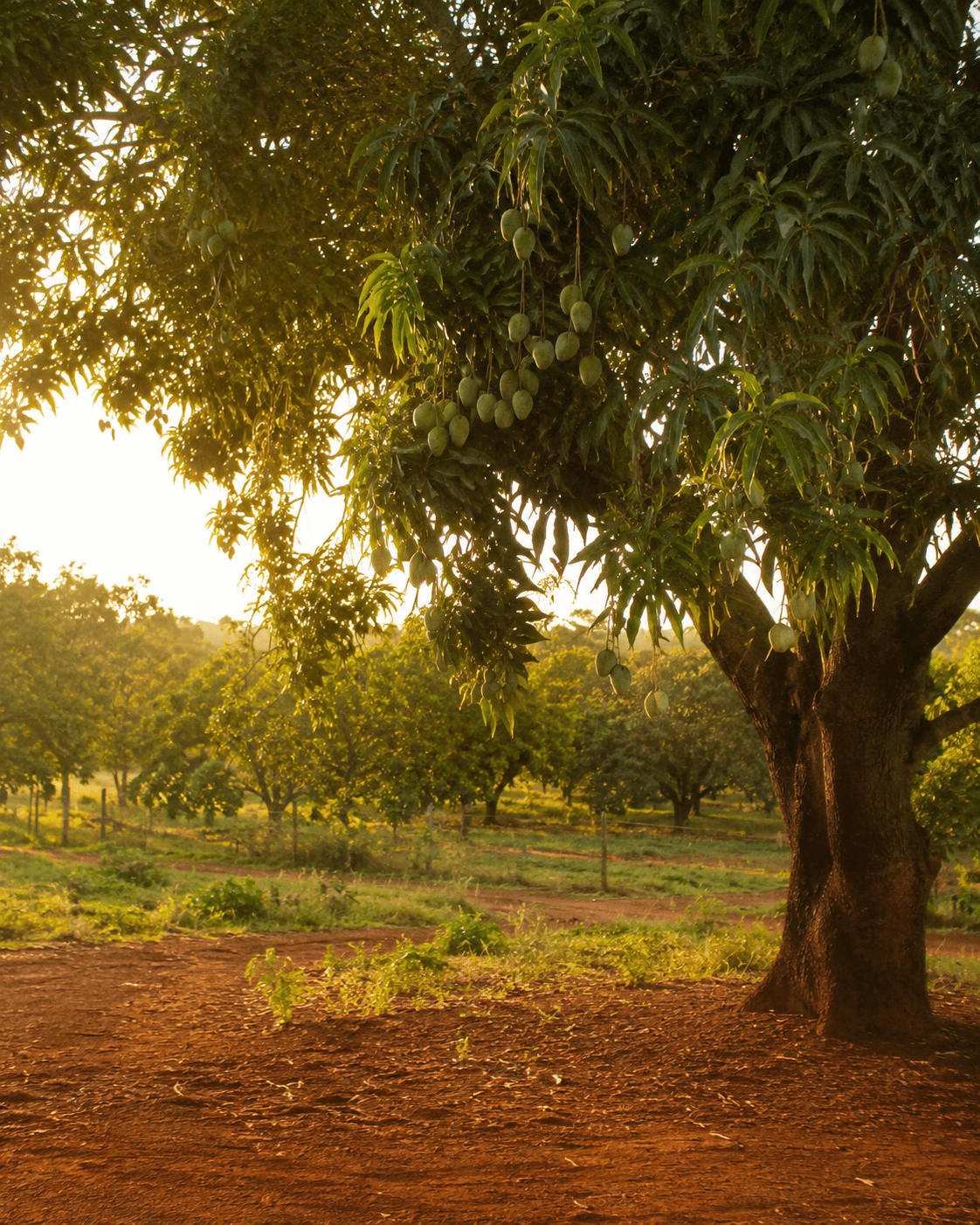 Photograph — orchard, Bambali
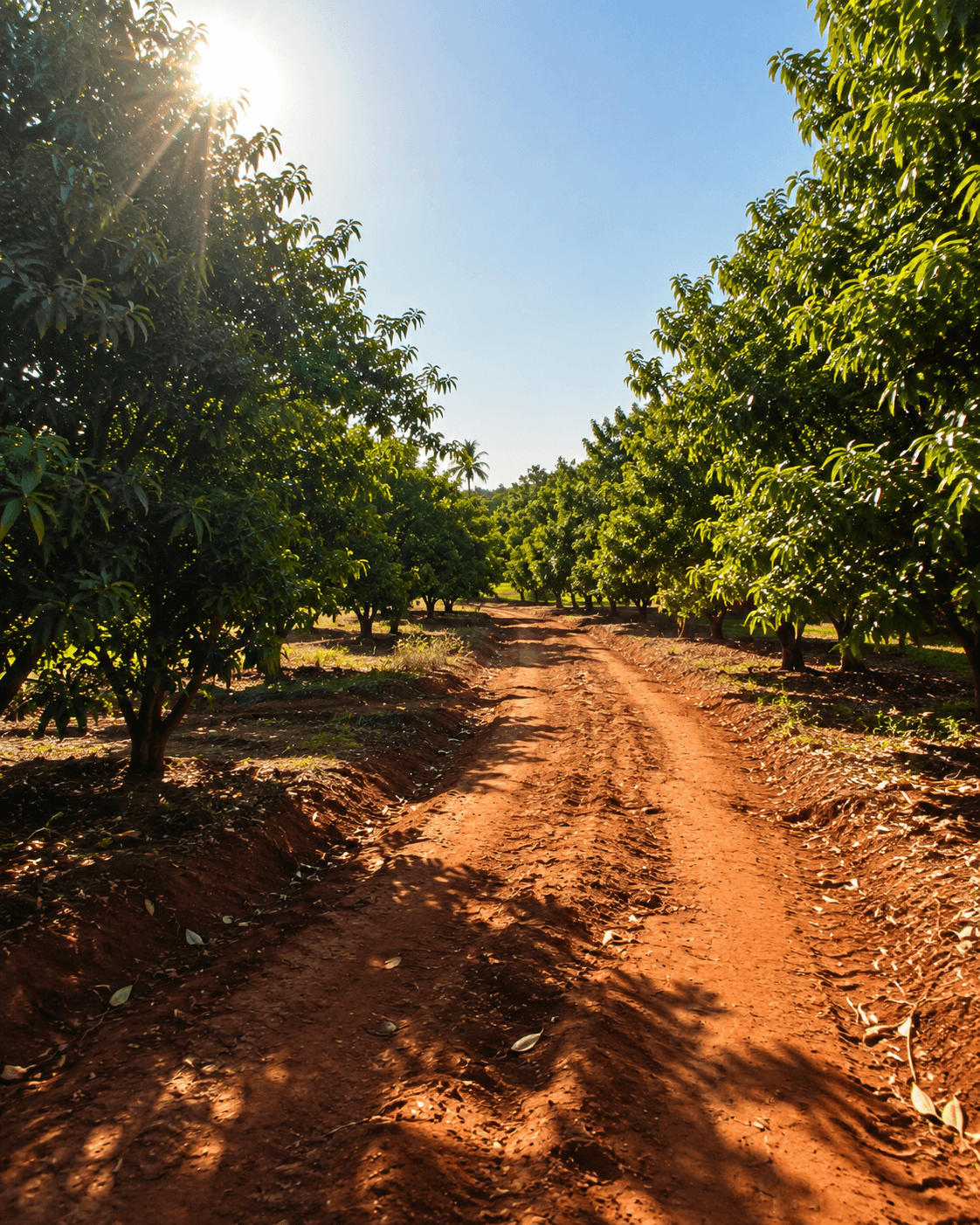 Photograph — laterite & track
A terroir, in the strict sense of the word.
A soil, a climate, a water. Three conditions rarely brought together — and which make, here, the difference in the fruit.
Laterite and fertility
Rich, deep soils, this red earth that colours the tracks and the hands. It drains, it feeds, it gives the fruit its density.
The Casamance river
Bambali sits on its banks. The river shapes the climate, softens the seasons and makes controlled irrigation of the orchard possible.
One season, one fruit
Greener and more humid than the rest of the country. The campaign opens in May and closes in August: a short window, a fruit at its peak.
A heritage, and a queen.
Casamance holds a varietal heritage that few regions can claim. Names that mean nothing elsewhere and everything here: Diourou, Balanta, Papaye, Sierra Leone, Bouko Diékhal. Mangoes of the yard, the village, the roadside.
On this foundation, one variety has established itself for export — and it is the one we grow.
Kent. A large fruit with a purple-red skin, a melting, juicy orange flesh, fibreless. On its own it accounts for more than 70% of Senegal's exported mangoes. It is the variety of our orchards, chosen for its keeping, its aroma and its consistency.
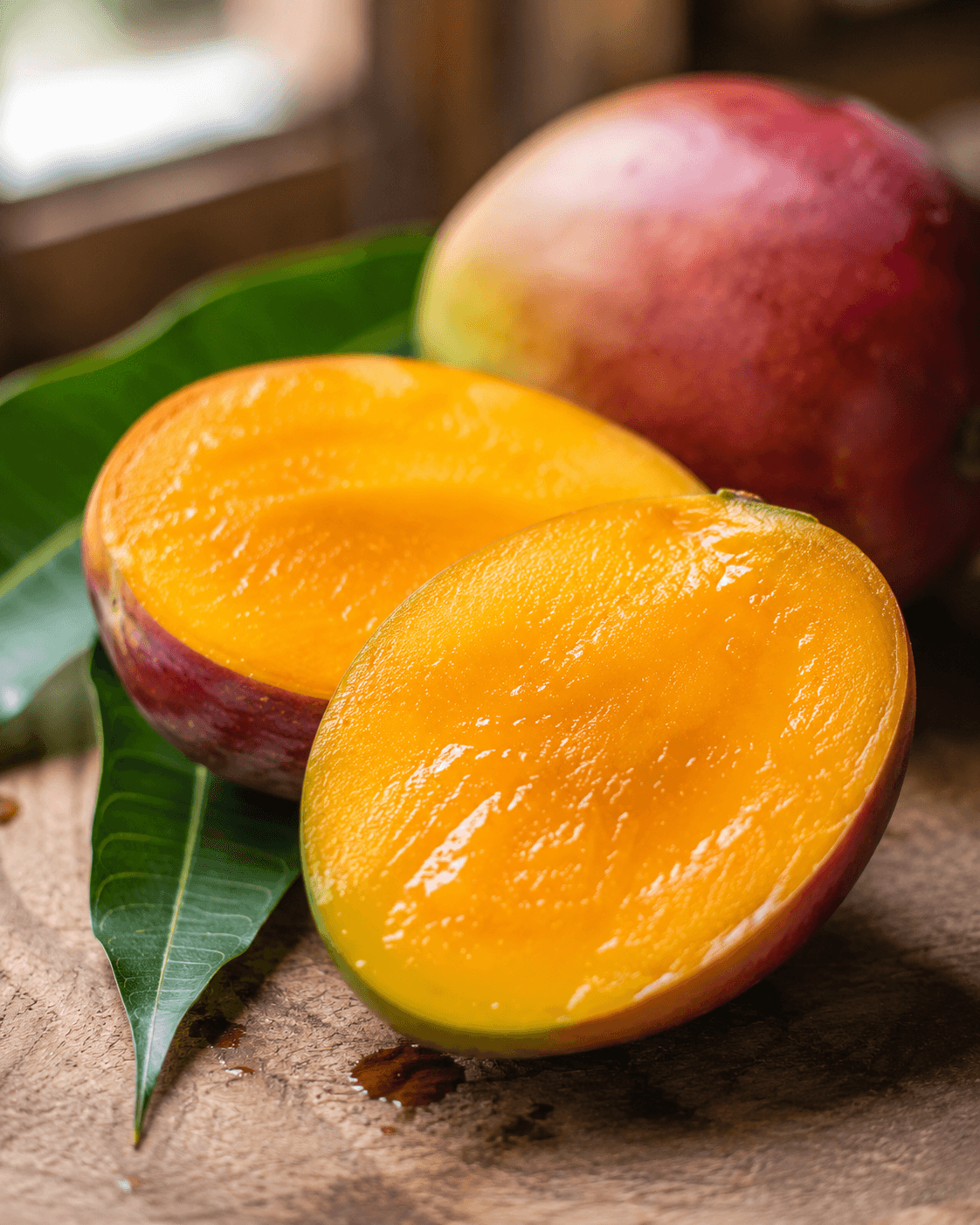 Photograph — Kent mango, macro
What grows here will be transformed here.
This is the whole purpose of SM10 AGRO: to return to this land the value it produces, and to make the Casamance mango a product the world comes looking for.